Every walk is an adventure for your dog — sniffing lampposts, trotting through the grass, exploring the void deck, maybe even sneaking a paw into a puddle or two. Cats, meanwhile, don’t need a leash to get into things — a windowsill ledge, the corridor outside, or a few minutes in the garden is all it takes. And then there’s the litter box, which every indoor cat’s paws visit multiple times a day.
Whether your pet is an outdoor explorer or a strictly-indoor companion, their paws are quietly picking up a lot more than just dirt. In fact, paws might be one of the germiest parts of your pet’s entire body. Here’s what’s really going on down there — and why it matters more than most pet owners realise.
Paws: The Ultimate Germ Magnet
Think about everywhere your dog’s paws touch in a single walk: pavements, grass, drains, other animals’ waste, puddles of unknown origin, void decks, park benches, and the occasional discarded food wrapper. Unlike your shoes, paws have no barrier between them and the ground — just skin, fur, and soft, absorbent paw pads with deep grooves between the toes that are perfect for trapping debris.
Veterinarians frequently observe that pets pick up a wide variety of contaminants on their paws during daily outdoor activities—from dirt and urban grime to hidden bacteria that aren’t visible to the naked eye.
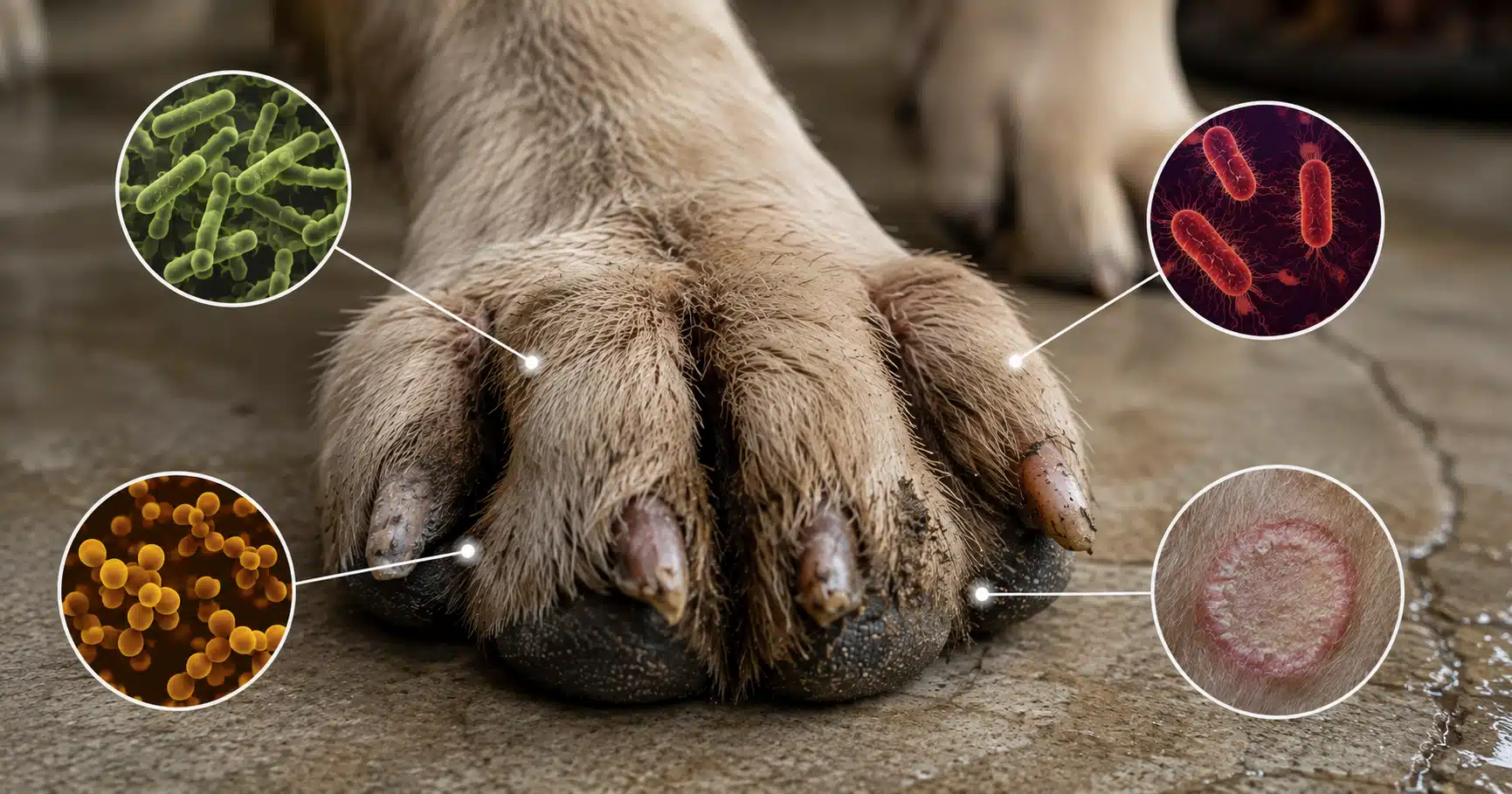
- Bacteria such as E. coli, Salmonella, and Methicillin-resistant Staphylococcus aureus (MRSA) — which can be present in contaminated soil, waste, or water.
- Fungal spores, including ringworm, which thrives in damp outdoor environments and is highly contagious to humans too.
- Parasite eggs and larvae, like hookworm or roundworm eggs, which can survive in soil for weeks.
- Chemical residues, including pesticides, herbicides, and de-icing salts used on public grounds.
- Everyday grime — oil, exhaust residue, and general urban dirt that builds up in high-traffic areas.
None of this is visible to the naked eye. Your pet’s paws can look perfectly clean while still carrying a significant microbial load.
Don’t Forget the Litter Box
If you’re a cat owner thinking “my cat doesn’t even go outside, so this doesn’t apply to me” — think again. The litter box is one of the most concentrated germ sources your cat’s paws encounter, often multiple times a day.
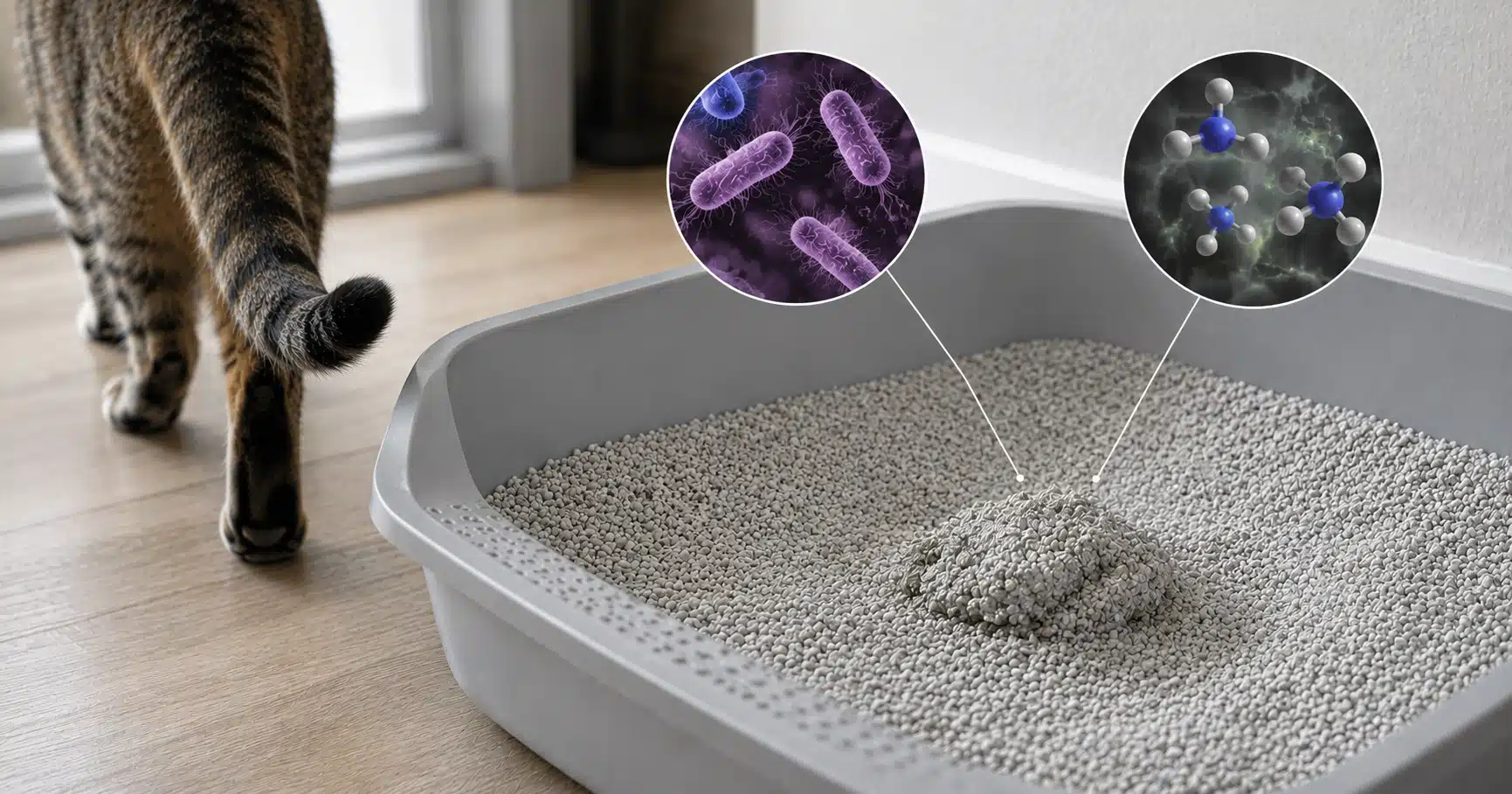
Every time your cat digs, buries, and steps out of the box, their paws pick up:
- Bacteria from faeces and urine, including E. coli and other coliform bacteria,
- Ammonia and other residues produced as urine breaks down, which builds up as urine breaks down and can irritate sensitive paw pads,
- Litter dust and particles, which cling to fur between the toes and get tracked across the house,
- Mould or bacteria from damp, unchanged litter, particularly in humid environments or boxes that aren’t cleaned frequently enough.
And just like outdoor paws, litter box paws don’t stay contained. Cats jump onto counters, beds, sofas, and dining tables — carrying whatever they picked up in the box straight onto surfaces your family touches every day. It’s one of the more overlooked hygiene gaps in cat care, precisely because it feels like a purely “indoor” issue.
Why This Matters More Than You Think
Here’s the part most pet owners don’t consider: your pet doesn’t just walk (or dig) on their paws — they lick them. A lot. Grooming is instinctive for both dogs and cats, and it means anything picked up outside — or in the litter box — has a direct route into your pet’s mouth and digestive system. This can lead to stomach upset, skin irritation between the toes, or in some cases, more serious infections.
And it doesn’t stop with your pet. Paws touch your sofa, your bed, your floors, your kitchen counters, and your hands the moment they settle in. Whatever came home from the walk — or out of the litter box — essentially gets a free pass into your living space, which is a real concern for households with young children, elderly family members, or anyone with a compromised immune system.
The Paw Pad Problem
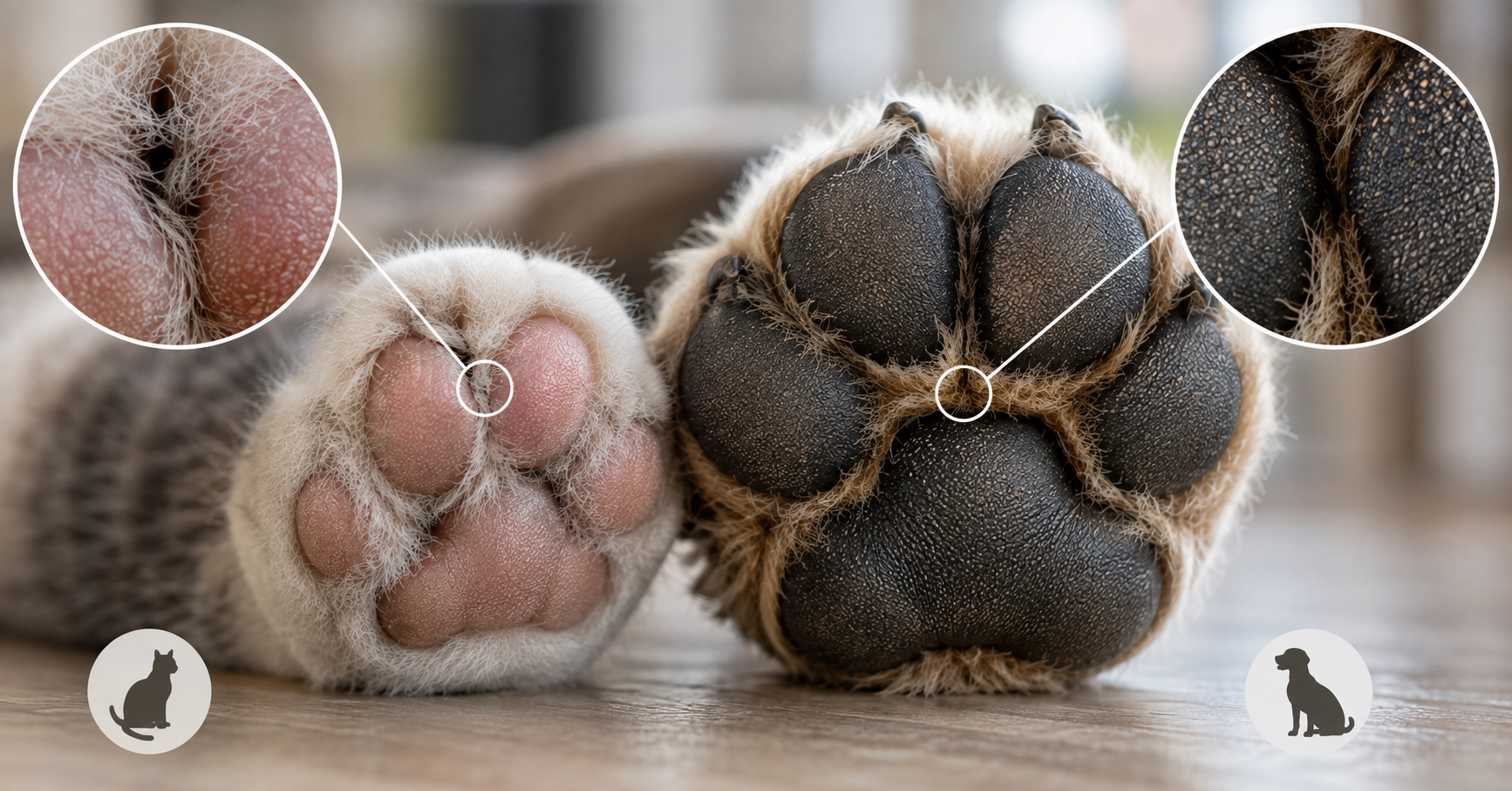
Paw pads aren’t like flat skin — they’re thick, cushioned, and covered in tiny ridges and deep creases, especially between the toes. This texture is great for grip and shock absorption, but it also creates the perfect hiding spots for moisture, dirt, and microorganisms to get trapped and multiply. Warm, damp, and dark: it’s essentially a five-star hotel for bacteria and fungus.
This is also why paw-related skin issues — like interdigital dermatitis or “yeasty paw” smell — are so common, especially in humid climates.
So, What Can You Actually Do?
The good news is that you don’t need to give your pet a full bath after every single walk or litter box trip (your pet will thank you for that). A few simple habits go a long way:
- Wipe or sanitise paws after every outdoor outing, especially after rain or visits to grassy or high-traffic areas,
- Give your cat’s paws a quick clean after litter box use, particularly if they have longer fur between the toes that traps litter and residue,
- Check between the toes regularly for trapped debris, redness, or irritation,
- Dry paws thoroughly, particularly between the pads, to reduce the risk of fungal growth,
- Sanitise, don’t just wipe — plain water and a cloth can remove visible dirt, but it won’t necessarily eliminate the germs living on the surface of the paw.
That last point is key. Wiping removes what you can see. Sanitising deals with what you can’t.
A Simple Step for a Cleaner, Healthier Home
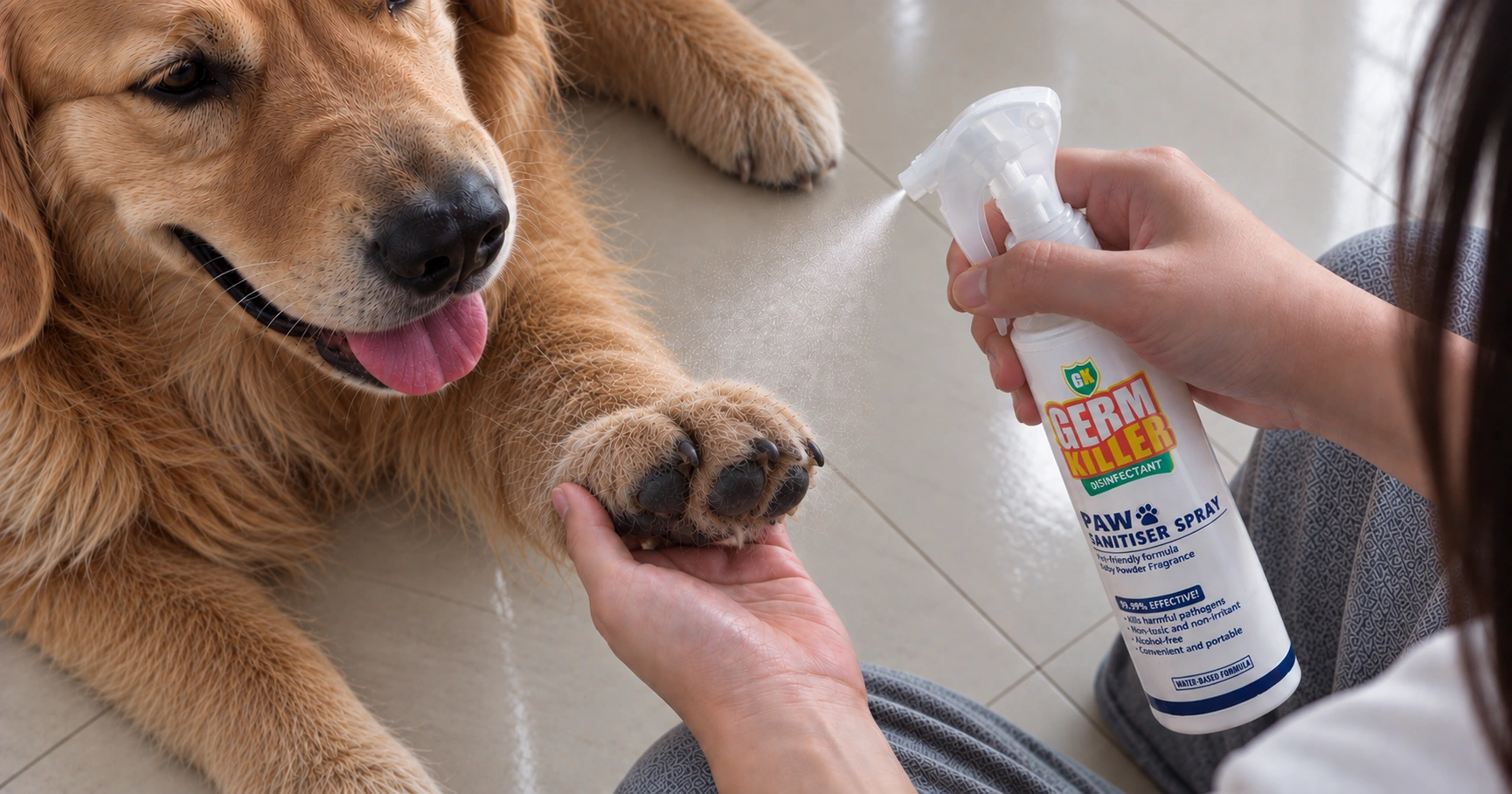
This is exactly why GK Paw Sanitiser™ was created — a quick, no-fuss way to eliminate germs on any pet’s paws, anytime, anywhere, whether your dog just got back from a walk or your cat just hopped out of the litter box.
Formulated to be alcohol-free, non-toxic, and non-irritating, GK Paw Sanitiser is gentle enough for sensitive paw pads — dog or cat — while still tackling the germs picked up outdoors or in the litter box. It’s designed to fit naturally into your routine:
- Spray on your pet’s paws (or body) after they’ve been exposed to germs outside,
- A quick spritz around the genital area after nature calls helps keep things fresh and clean too,
- Hold the spray about 10cm from the paw and gently press to release a fine, even mist,
- Make sure you cover the whole paw, including between the toes and the pads, where germs tend to hide,
- With clean hands, gently massage the sanitiser in — this helps it spread evenly and absorb properly.
Whether you’re coming back from a walk in the park, a trip to the vet, a play session at the dog run, or your cat’s latest litter box visit, a quick spray of GK Paw Sanitiser helps keep the germs where they belong — off your sofa, off your bed, and out of your pet’s mouth during their next grooming session.
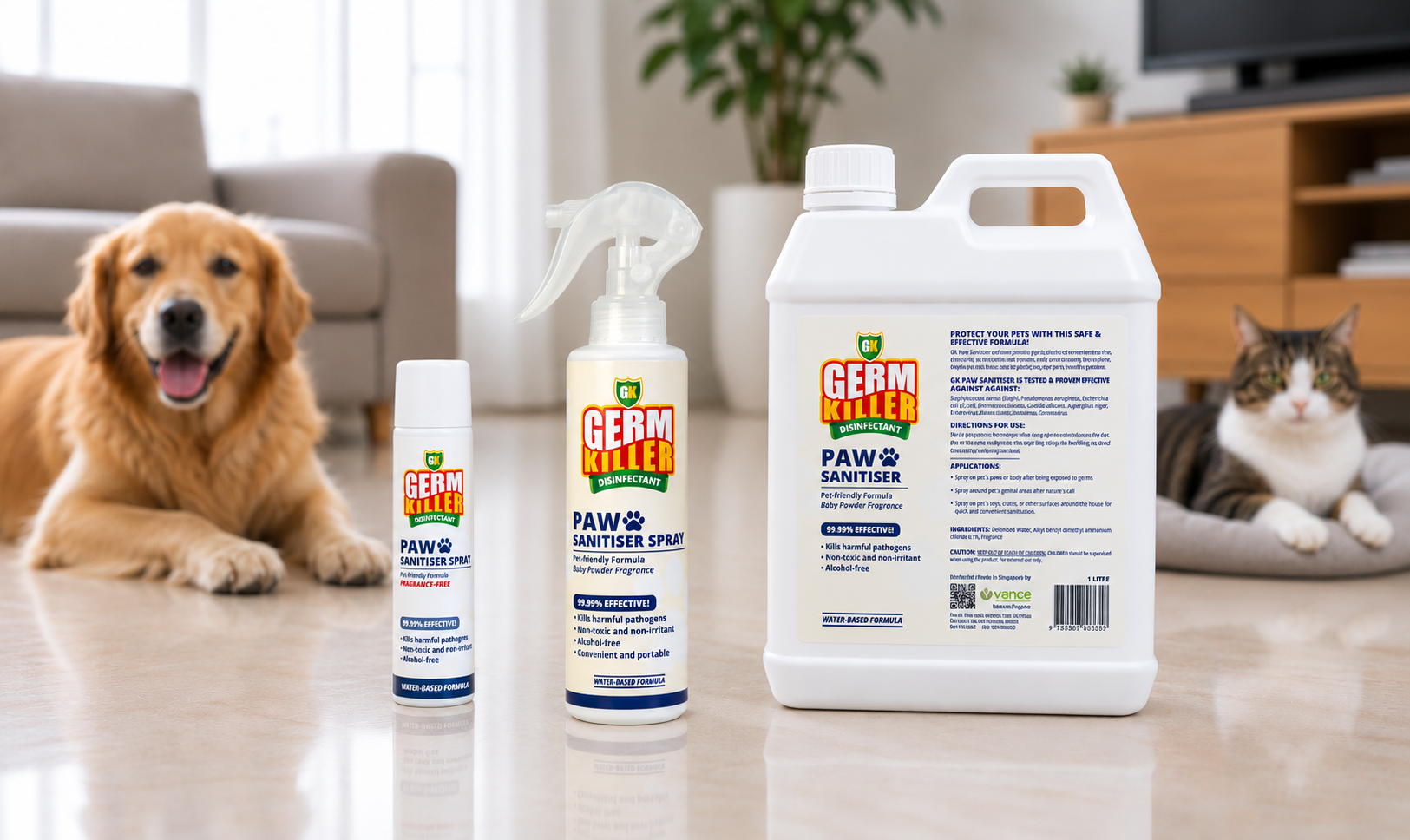
Clean paws start with one simple step. Explore GK Paw Sanitiser™ and the rest of the GK GermKiller range at gk-germkiller.com and make post-walk (and post-litter box) paw care a simple, effortless part of your pet care routine.