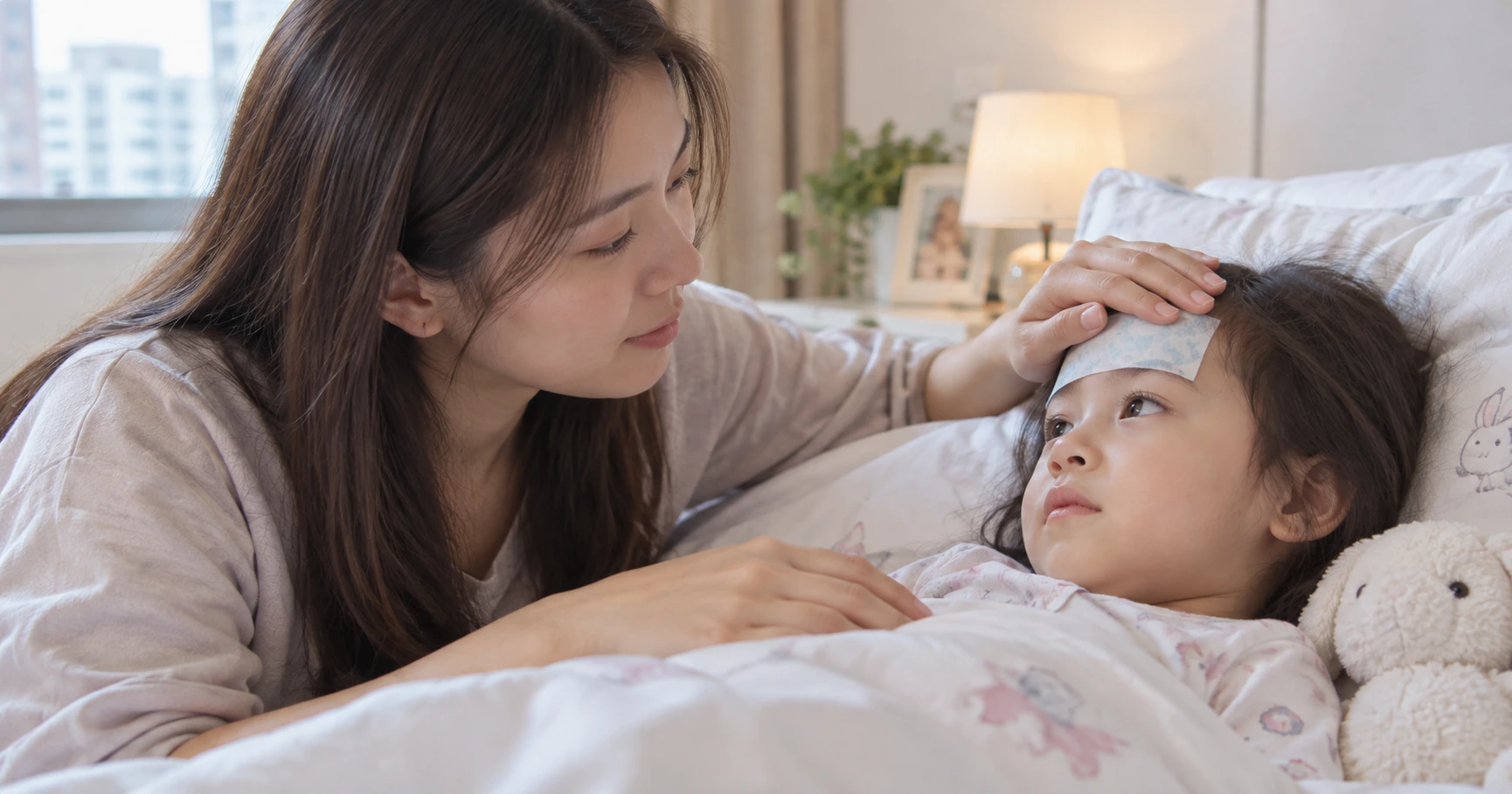
If your toddler has been in and out of the clinic since starting childcare — one cold barely clearing before a fever or HFMD scare starts — you’re not imagining it. Frequent illness is one of the most common and most tiring parts of the toddler years in Singapore. Here’s what’s actually going on, when it’s worth a doctor’s visit, and what genuinely helps at home.
Is It Normal for Toddlers Here to Get Sick This Often?
Usually, yes. HealthHub, the Ministry of Health’s official patient education portal, notes that it’s common for toddlers to fall sick, and that a younger child with a less developed immune system may simply take longer to recover from a cold than an older child would.
The reason is straightforward: most of these illnesses are your toddler’s immune system meeting a virus for the very first time. There’s no shortcut around that first encounter — it’s how the body learns to recognise the same bug — the virus or bacteria causing the illness — and builds up its defences to fight it off more effectively the next time around.
Why Toddlers in Singapore Get Sick So Often
Childcare and shared spaces
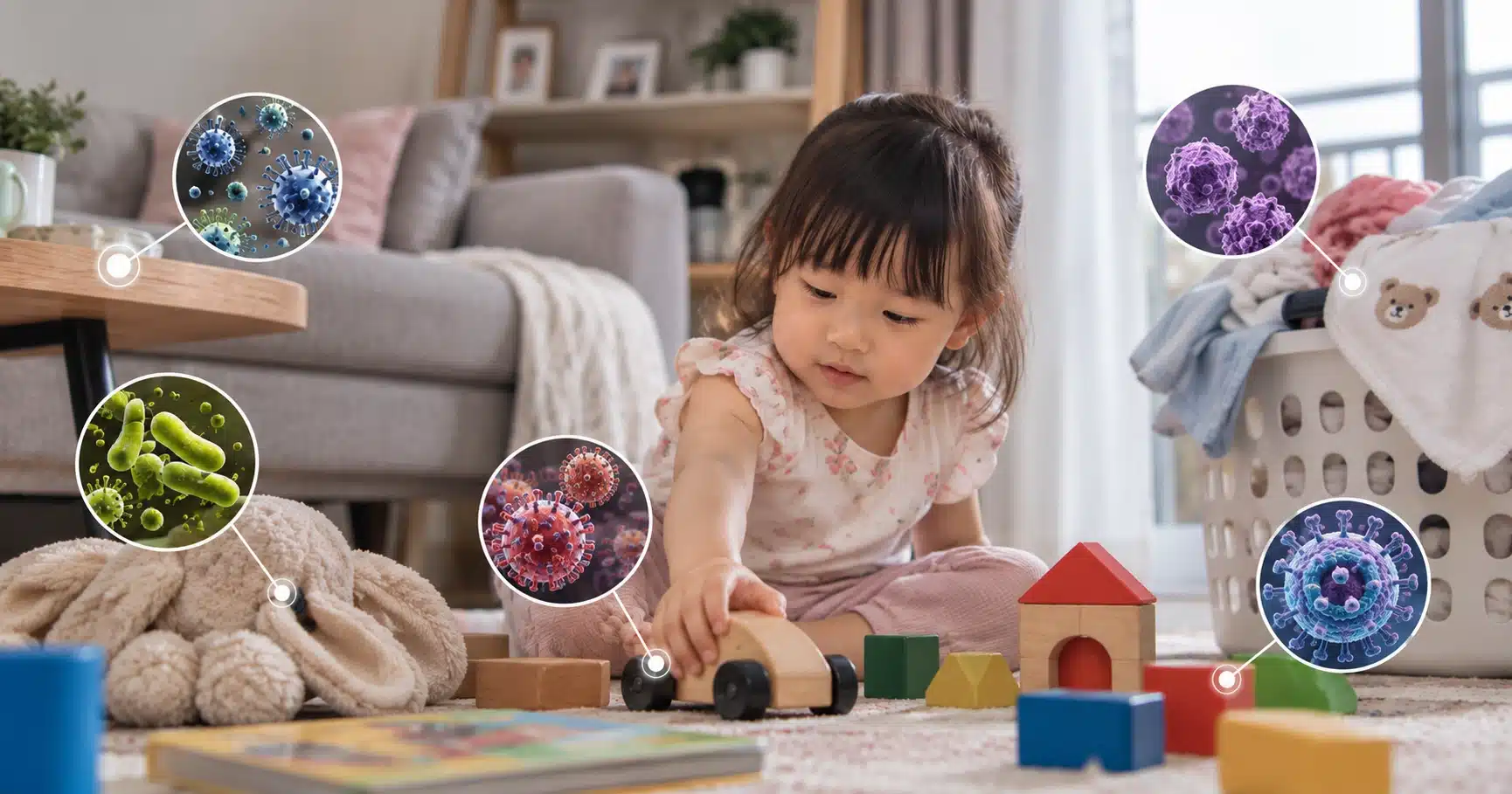
Shared toys and close daily contact with other children are effective ways for colds, flu, and stomach bugs to move from child to child — especially before toddlers have reliable hand-washing habits of their own.
Hand, foot, and mouth disease (HFMD)
According to the Communicable Diseases Agency (CDA, part of MOH), HFMD is endemic in Singapore, mainly affects children under 5, and spreads through close contact, saliva, or contaminated surfaces. For families here, it’s less of an occasional scare and more a routine, recurring part of the childcare years.
Putting everything in their mouth
Toys, cot rails, and shared equipment are all fair game for a toddler exploring the world orally — a direct, easily overlooked route for germ transmission.
Heat and humidity at home
Singapore’s warm, humid climate makes it easier for bacteria and mould to build up on damp laundry, bathroom surfaces, and high-touch items like cot rails and high chair trays if they aren’t cleaned often.
When Should You Actually Worry?
Frequent mild illness on its own isn’t a red flag. It’s worth speaking to your paediatrician if your toddler has infections that keep recurring or need repeated courses of antibiotics, isn’t gaining weight as expected, or has a fever lasting more than about a week. For HFMD specifically, the CDA notes that while most cases are mild and self-limiting, you should seek medical review promptly if symptoms seem unusually severe. If you’re ever unsure, your paediatrician or polyclinic will know your child’s history far better than a search engine can.
What Actually Helps at Home
You can’t build a germ-free bubble around a toddler, and you shouldn’t try to — some exposure is a normal, necessary part of building immunity. What you can do is reduce how much harmful bacteria and virus sits on the toys, surfaces, and laundry your toddler is in constant contact with.
When choosing a household disinfectant for nursery spaces, look for hospital-grade formulas that remain strictly non-toxic for children and pets. Standard household cleaners often rely on harsh chemicals that leave irritating residues on items children put in their mouths or pets lick off their paws.
GK Concentrate™ — for regular deep-cleaning
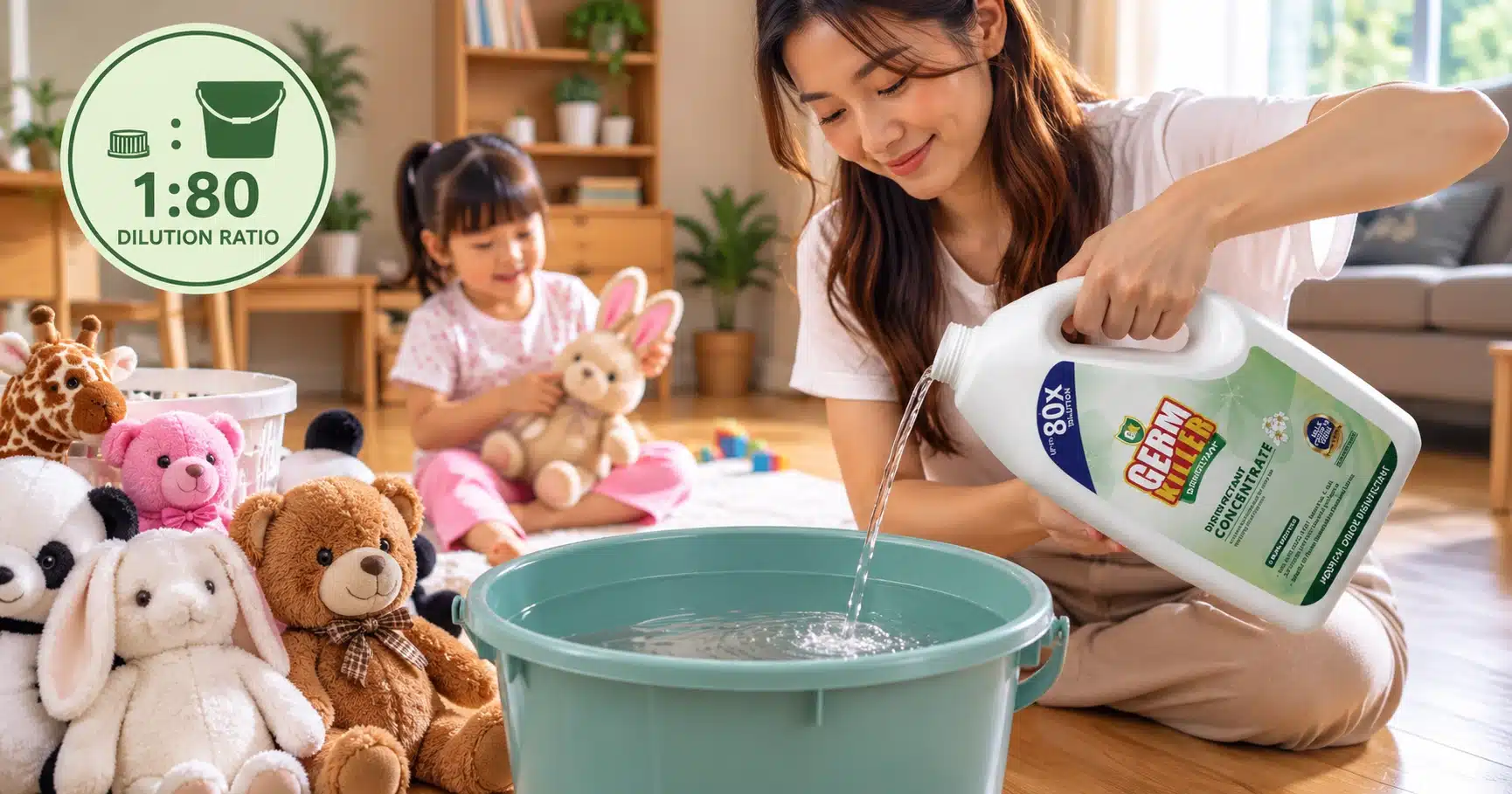
GK Concentrate™ is a hospital-grade, multi-surface disinfectant designed to kill 99.9999% of bacteria and viruses without relying on harsh chemicals. It is a concentrated formula — mix 1 part concentrate to 80 parts water before each use.
Child & Pet Safe
Independently tested to be non-toxic and non-irritating to the skin, eyes, and mouth. It is safe for homes with crawling toddlers, teething babies, and indoor pets.
Tested Efficacy
Certified effective against Rotavirus (a leading cause of severe childhood gastroenteritis), Influenza A, MRSA, and E. coli.
Use it on:
- Floors — living room, bedroom, and kitchen floors
- Soft toys and fabric items — since it also sanitises laundry, it’s suited for washing stuffed animals, play mats, and muslin cloths, not just hard plastic toys
- Baby and household laundry — bibs, clothes, bedsheets, towels, added to a hand-wash or washing machine load
- Bathrooms — toilets, sinks, and drains
It’s tested effective against Rotavirus (a leading cause of childhood gastroenteritis), Influenza A, and common bacteria, and is tested non-toxic and non-irritating to skin, eyes, and mouth — worth knowing since a toddler’s toys often end up back in their mouth minutes after cleaning. It comes in Floral or Citronella (natural insect-repelling fragrance).
GK Surface™ — for quick, in-between wipe-downs
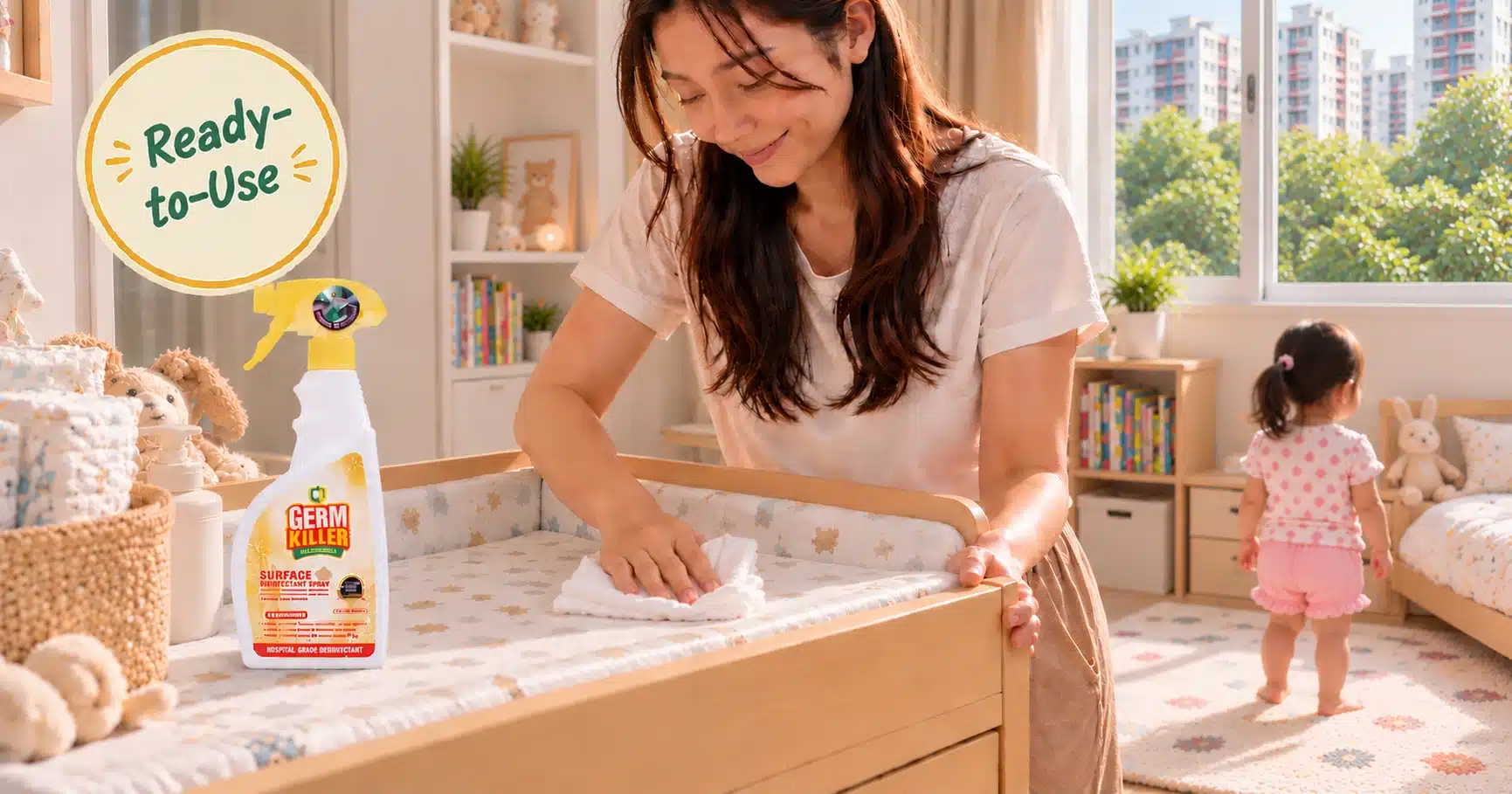
GK Surface™ is a ready-to-use, hospital-grade spray formulated for high-touch surfaces that need fast, daily disinfection without rinsing.
HFMD Protection
Tested effective against Coxsackie A16, one of the main enterovirus strains linked to Hand, Foot, and Mouth Disease (HFMD).
30-Day Antimicrobial Shield
Leaves a non-toxic protective barrier active for up to 30 days, preventing germ re-colonization between wipes.
Non-toxic formula
Formulated without harsh fumes or toxic residue.
Use it on:
- Hard toys like blocks, bath toys, ride-on toys, playpens
- High chair trays and baby dining tables, before and after meals
- Cot rails, playpen frames, and stroller handles
- Diaper changing mats and stations
- Door handles, light switches, and remote controls — surfaces the whole family touches
- Car seat buckles and handles
It’s tested effective against Coxsackie A16, one of the enterovirus strains linked to HFMD, and leaves an antimicrobial film for up to 30 days.
GK Air™ — for indoor air quality
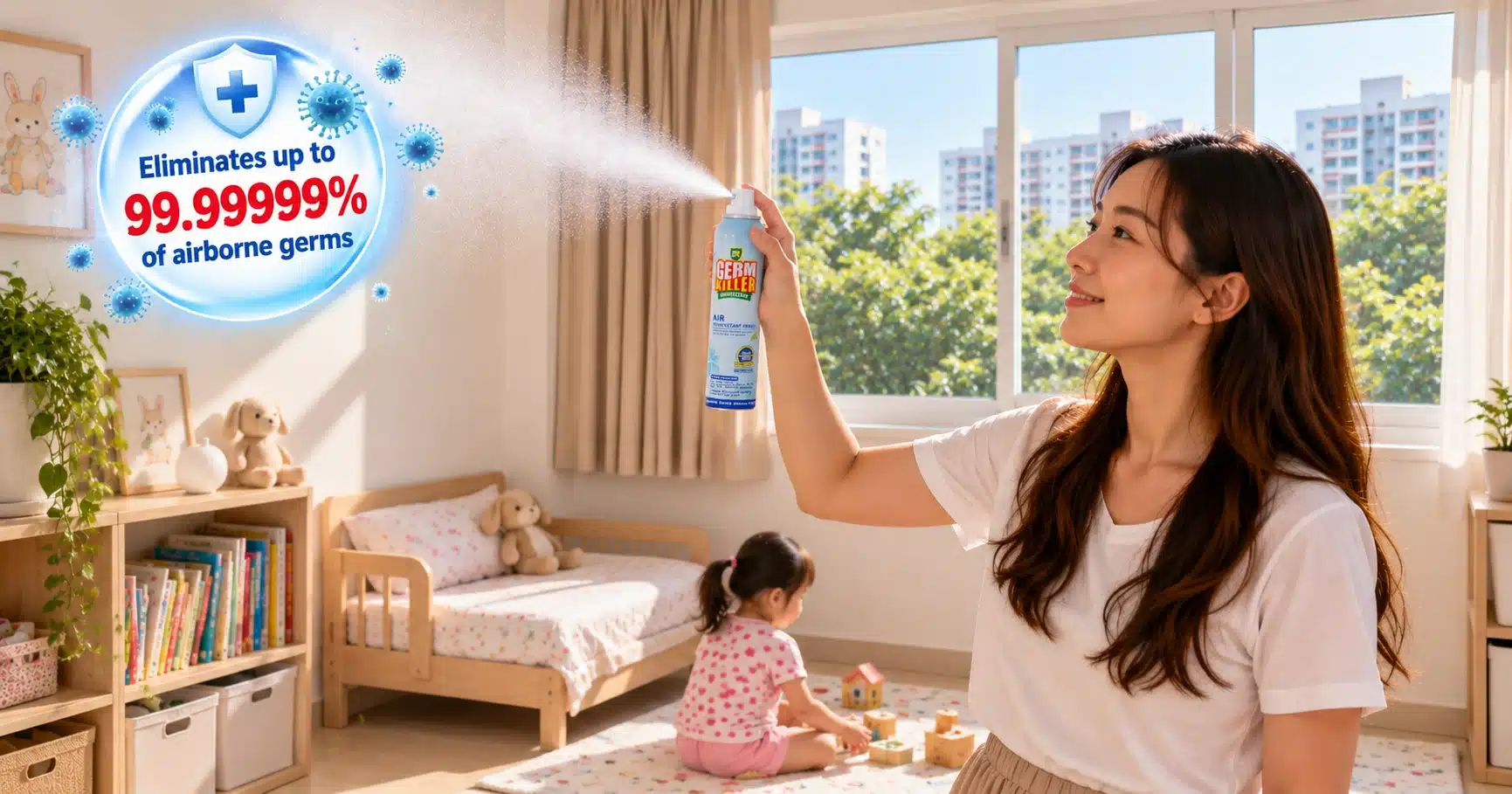
GK Air™ is a premium air disinfectant that eliminates 99.9999% of airborne bacteria and viruses while destroying odor-causing molecules at the source, rather than masking them with heavy artificial perfumes.
Safe for Sensitive Respiratory Systems
Formulated to be gentle around babies, pets, and family members with sensitive airways or allergies.
Use it in:
- Nurseries and bedrooms, especially rooms that stay air-conditioned and shut for long stretches
- Bathrooms
- Diaper bins and rubbish areas
Putting It Together
- Daily: wipe high-touch items — high chair, cot rails, changing station — with GK Surface™
- Every few days: mop floors and soak toys in a freshly mixed GK Concentrate™ solution
- Laundry day: add diluted GK Concentrate™ to the wash for bibs, clothes, and soft toys
- As needed: spray GK Air™ in the nursery or bathroom to keep the air fresh
The Bottom Line
A toddler who seems to catch every bug going around isn’t a reflection of anything you’re doing wrong — it’s a normal, if exhausting, stage of building a working immune system, made more frequent by group childcare and Singapore’s warm, humid climate. You can’t and shouldn’t try to prevent every illness. But a hygiene routine that’s easy enough to actually stick to — wiping down what your toddler touches most, cleaning toys and laundry regularly, and keeping indoor air fresh — is one of the few things within your control, and it adds up over time.
With toys, surfaces, laundry, and air all covered, you’ve closed off the main everyday routes germs use to reach your baby — giving them a cleaner, safer space to explore, play, and grow in, illness or not.
Shop the routine: GK Concentrate™ |GK Surface™ |GK Air™
This article provides general hygiene guidance and is not intended as medical advice. Consult your paediatrician if you have any concerns about your child’s health.