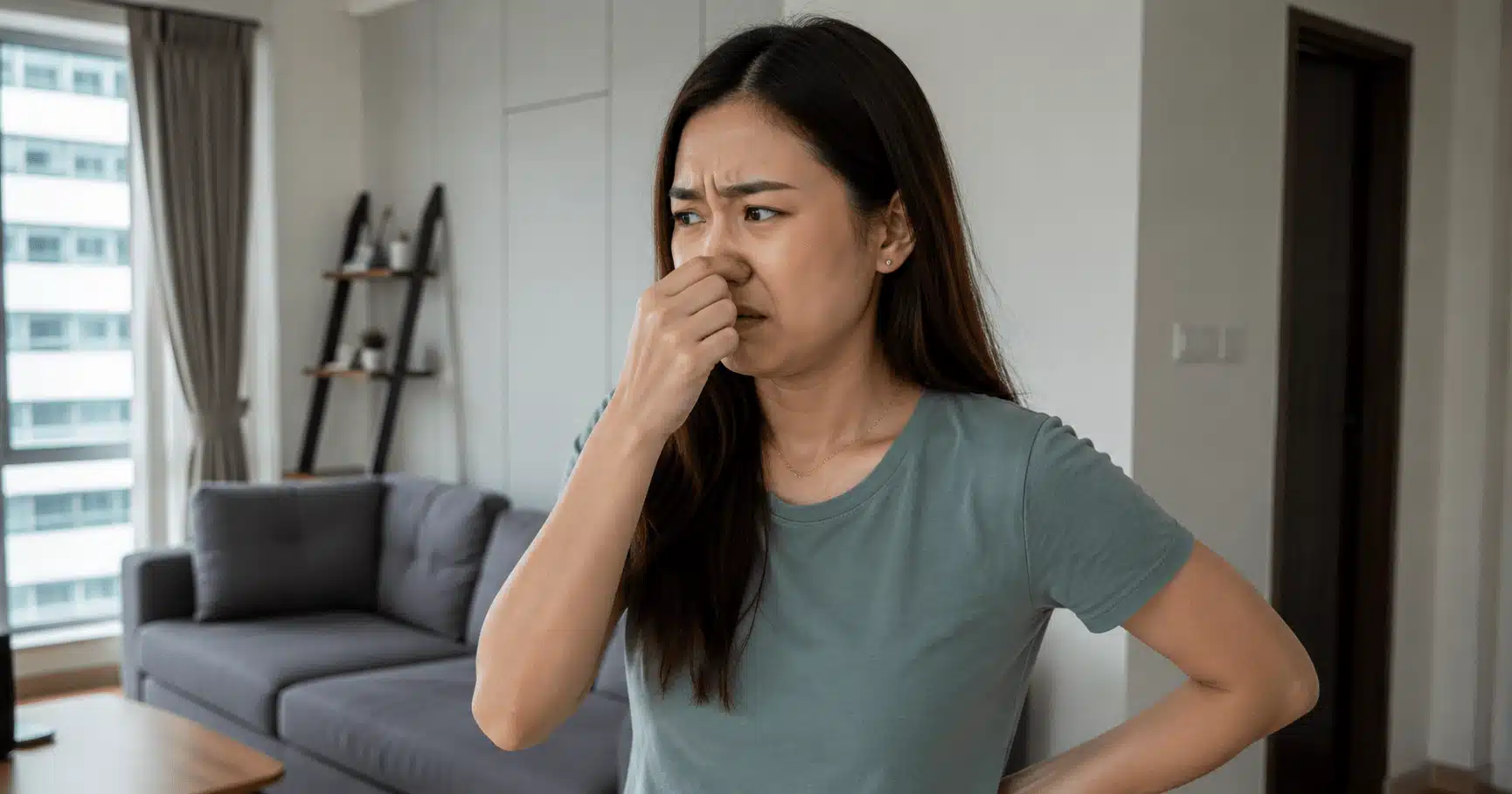
You’ve smelled it before you can even name it. You walk through the front door and something’s… off. A faint mustiness. A whiff of the bin. That unmistakable “damp towel” smell drifting from the bathroom. You spray a bit of air freshener, it fades for a few minutes, and then — somehow — it’s back.
If this sounds familiar, you’re not imagining things, and you’re definitely not alone. Most homes have at least one persistent odour hiding somewhere, and more often than not, it’s not really about the smell itself — it’s about what’s causing it.
Odour Is a Symptom, Not the Problem
Here’s something most of us don’t think about: smell doesn’t come from nowhere. Unpleasant odours are almost always a sign that bacteria, mould, or organic matter is breaking down somewhere nearby. The smell is simply the byproduct.
That’s why spraying a floral air freshener over a bad smell often feels like it “doesn’t quite work” — because it isn’t dealing with the actual bacteria producing the odour. It’s just adding a second, competing smell on top of the first one. A few minutes later, the bacteria are still there, still multiplying, and the odour comes right back.
To actually get rid of a smell, you need to address what’s making it — not just cover it up.
The Usual Suspects Around the House
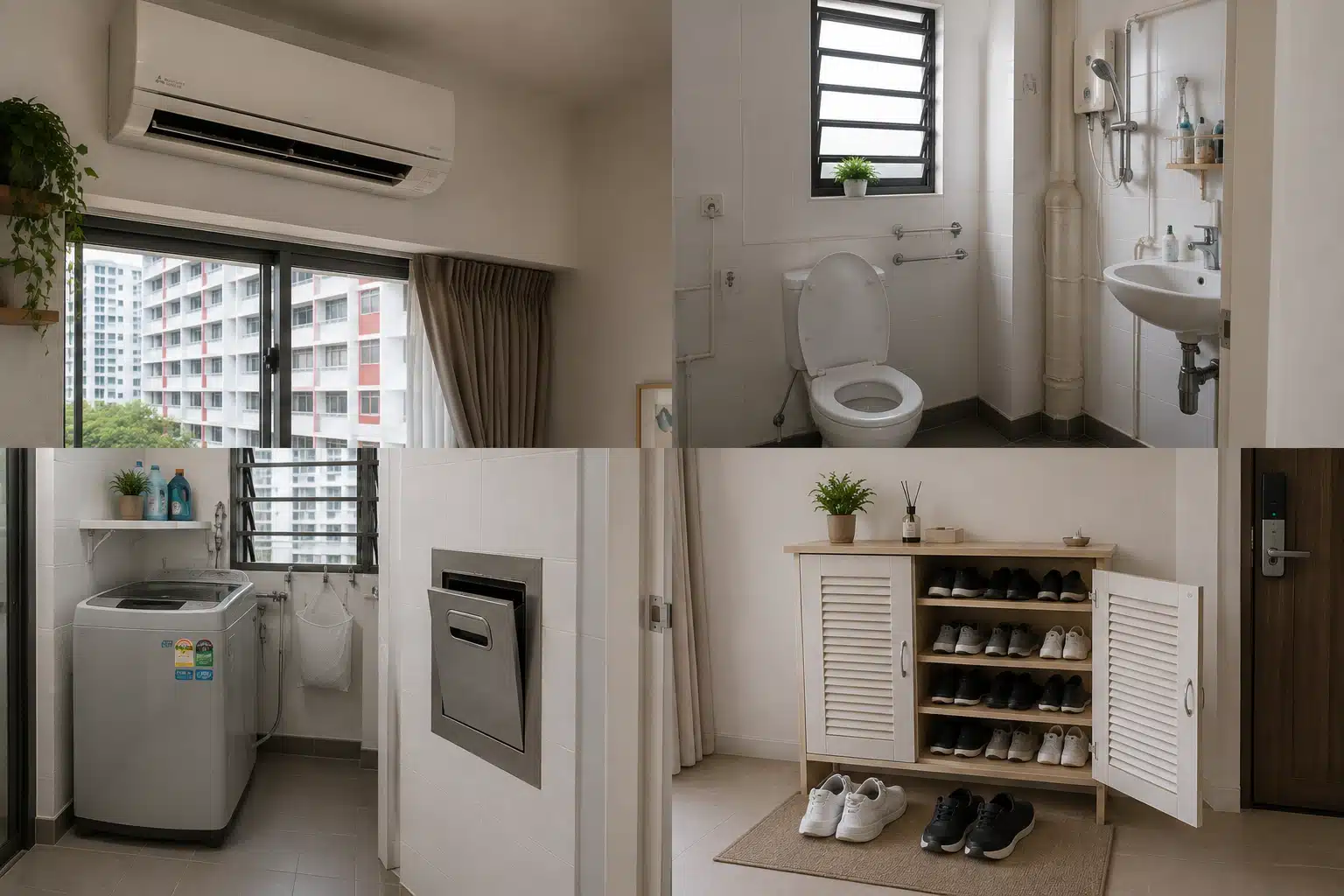
1. The Air Conditioner
That slightly musty, “wet dog” smell when you switch on the air-con? It’s extremely common, especially in humid climates. Air-con units are cool, damp, and dark inside — basically a perfect breeding ground for mould and bacteria, which build up on the coils and filters over time and get blown straight into the room every time the unit runs.
2. Rubbish Bins and Rubbish Chutes
Food waste breaks down fast, especially in warm weather, and the bacteria responsible for that breakdown are exactly what produces the sour, rotten smell we associate with bins. Rubbish chutes in apartment buildings are often worse, since they’re shared, poorly ventilated, and rarely cleaned.
3. Bathrooms
Damp towels, shower drains, toilet bowls, and bath mats all hold onto moisture — and moisture plus organic residue is a recipe for bacterial growth. Shared bathrooms can also develop that lingering ‘public toilet’ smell, particularly when moisture and organic residues accumulate in less visible areas.
4. Shoes and Shoe Cabinets
Feet sweat. A lot. Combine that with an enclosed shoe cabinet with little airflow, and you’ve got the ideal conditions for odour-causing bacteria to thrive — which is why some shoes seem to “smell no matter what.”
5. Cigarette Smoke
Cigarette odour doesn’t just float away — it clings to soft furnishings, curtains, and even walls, and can linger for hours or days after the last cigarette was smoked.
6. Car Interiors
Warm, enclosed, and often carrying a mix of food crumbs, sweat, and humidity — cars are notorious for developing odours that regular vacuuming doesn’t fully solve.
When It Hits Closer to Home: Kids and Pets
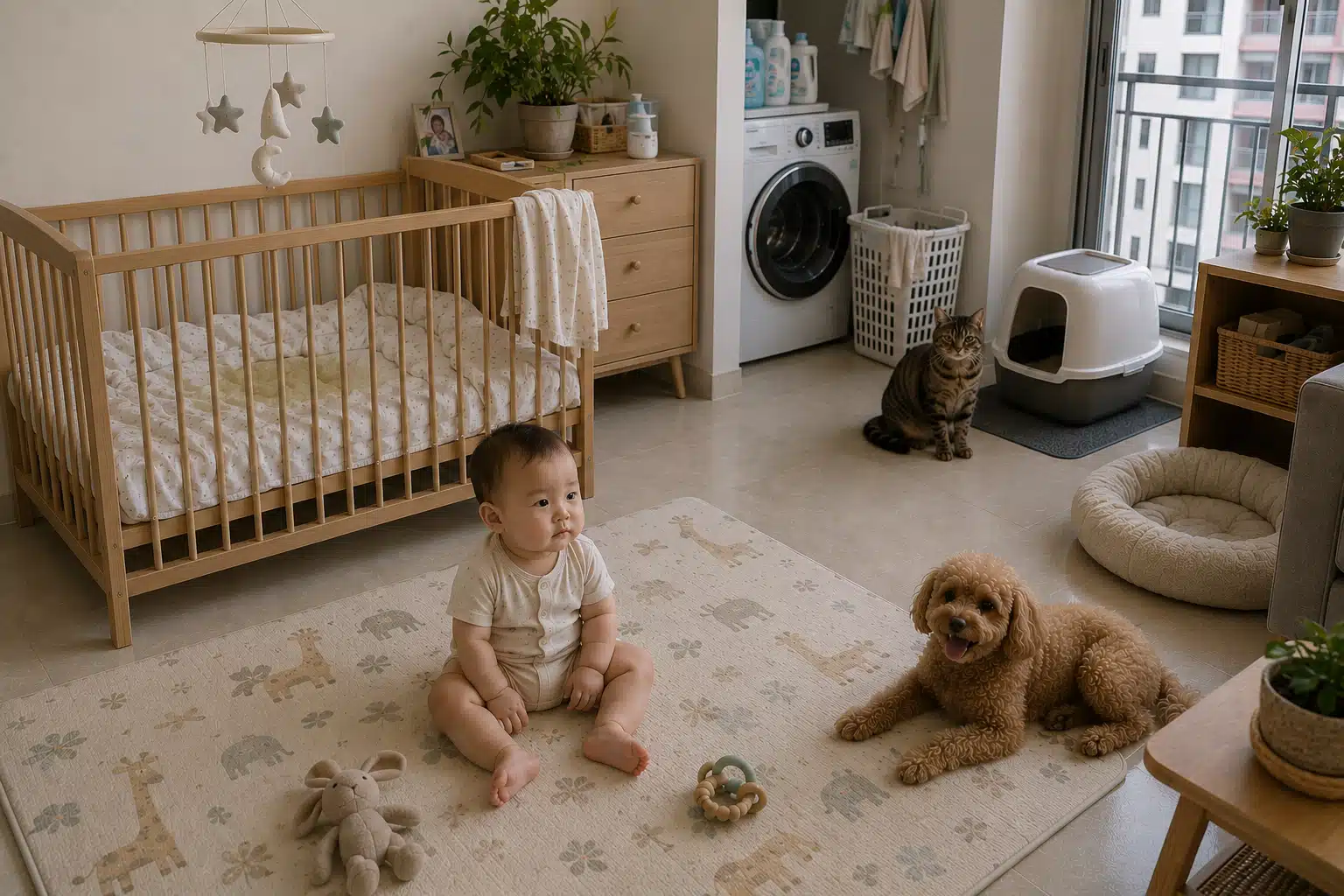
If you have young children or pets at home, chances are you’re even more familiar with unexpected odours — and it’s not because your home is any less clean. It’s simply that kids and pets create more of the conditions that lead to odour in the first place.
For parents, bedwetting accidents are common, and once urine soaks into a mattress or fabric, the smell can be surprisingly stubborn to shift — because the bacteria causing the odour are now embedded in the material itself, not just sitting on the surface.
For pet owners, the list is even longer: a litter box that needs freshening between cleans, a “doggy” smell that seems to return no matter how often you bathe your dog, or that unmistakable scent hanging around a pet bed or crate. None of this means you’re not keeping a clean home — it just means pets (wonderful as they are) come with their own set of odour-producing bacteria.
In both cases, the instinct is often to reach for a stronger-smelling spray. But as we covered earlier, fragrance alone doesn’t solve the underlying issue — it just adds another layer on top of it.
Tackling Odour at the Source
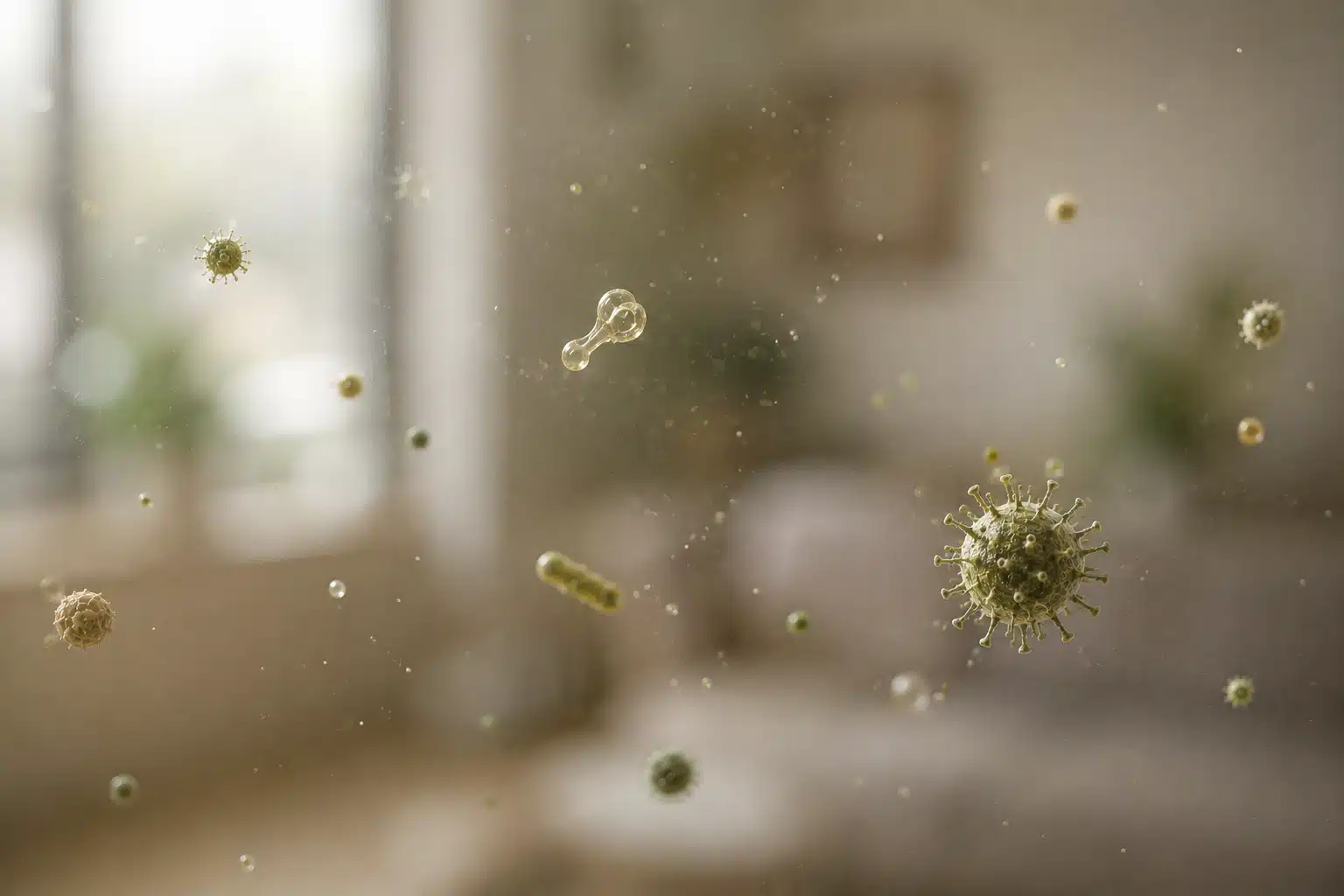
Since many household odours are caused by bacteria, mould, organic residues, or other volatile compounds, the most effective way to deal with it is to target that source directly, rather than masking it.
A few habits help:
- Improve airflow wherever moisture tends to build up — bathrooms, shoe cabinets, air-con units,
- Clean regularly, but also disinfect, since visible cleanliness doesn’t always mean the bacteria are gone,
- Address spills and accidents quickly, before odour-causing bacteria have time to settle into fabric or upholstery,
- Use a product that eliminates the bacteria, not just one that adds fragrance on top of it.
That last point makes the biggest difference — and it’s exactly the gap most air fresheners don’t close.
Fresh Air, Without the Guesswork
This is where GK Air™ comes in. Unlike a typical air freshener, GK Air is a water-based air disinfectant that improves air quality by destroying odour-causing bacteria at the source, instead of simply masking the smell with fragrance.
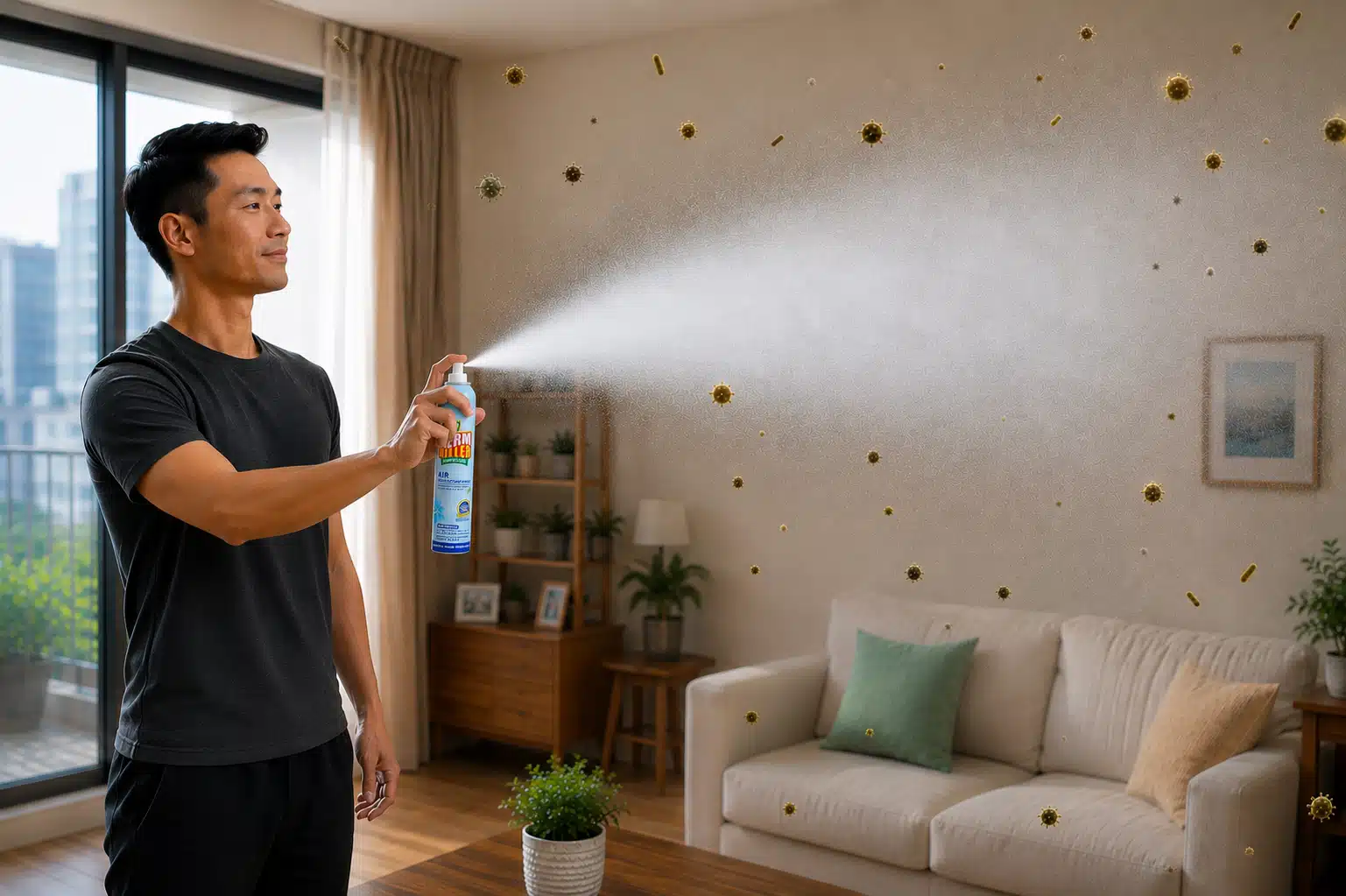
It’s formulated to be non-toxic, non-flammable, surfactant-free, and formulated for daily indoor use around the whole family, including humans and pets. It even carries a light, refreshing green tea fragrance, so your space smells clean because the air actually is cleaner.
GK Air fits naturally into all the odour hotspots covered above:
- Spray it into the air-con unit before switching it on, for genuinely fresh air instead of that musty first blast,
- Use it to eliminate cigarette odour clinging to soft furnishings and shared spaces,
- Freshen up shared bathrooms, tackling the bacteria behind that lingering smell,
- Keep rubbish bins and chutes under control between cleans,
- Freshen the air after bedwetting accidents — while you clean and disinfect the mattress itself (GK Surface™ is built for that), a few sprays of GK Air around the room clears the lingering odour in the air rather than just the surface,
- Freshen litter boxes, pet beds, and crates to keep pet odours from building up between cleans,
- Spritz shoe cabinets and car interiors for a fresher space day to day.
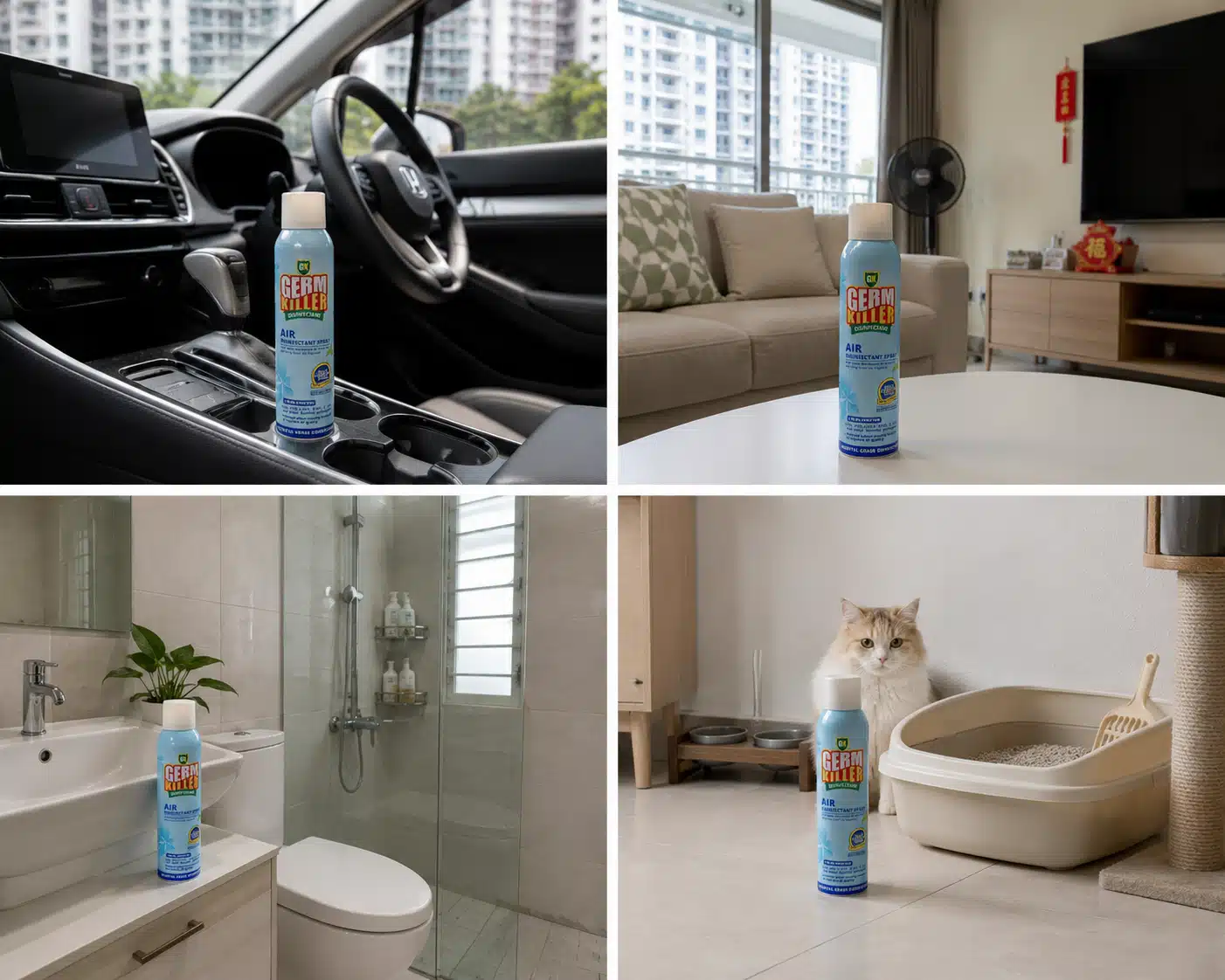
Real GK Air users already reach for it in exactly these situations — from freshening dustbins, shoes, and car carpets, to clearing the air after everyday household accidents.
The next time something smells “off,” don’t just mask it — eliminate it. Explore GK Air™ and the rest of the GK GermKiller range today.